
Rota Vicentina
A 140-mile walk from Porto Covo to Lagos along the rugged coastline of Portgual.


Introduction to the Rota Vicentina
The Rota Vicentina, also known as the Fisherman’s Trail, follows the stunning coastline of southern Portugal, offering spectacular ocean views and charming coastal towns. The trail technically begins south of Lisbon in the town of Sines, although most hikers choose to start one town over in Porto Covo to avoid walking through an industrial area. From there, the trail tracks the coastline south to Cabo de São Vicente—the most southwestern point in mainland Europe—before heading east toward Lagos.
While most hikers prefer to walk the trail from north to south, it can easily be tackled in either direction thanks to clear signposting both ways. If you are looking for a change of scenery, the Historical Way is a companion trail that travels further inland through historic villages. It can be combined with the Fisherman’s Trail or used as a safer alternative if coastal weather conditions become hazardous.
You can walk the trail year-round, though extreme heat can be a major hurdle during the height of summer in July and August. Expect to be in full sun for most of the journey, as shady areas are few and far between. I walked the trail in May and was greeted by beautiful wildflowers and dozens of stork nests perched on the cliffs. Because the stork eggs had already hatched by then, I even got to see the baby storks!

The 11-Stage Itinerary
Typically, the Fisherman’s Trail is hiked in 12 stages, although many opt to do the original Rota Vicentina route, which covers the first 5 stages to Odeceixe. Personally, I chose to combine the last two shorter stages into one longer day.
I normally buy a guidebook before hitting a trail to help map out logistics, but I wasn’t able to find one available in the United States. A German friend I met along the way had a wonderful guidebook written in German, so they do exist—they just might not be in your native language! Instead, I relied heavily on the official Rota Vicentina website to aid in planning. It includes everything you need to know, along with links to available accommodations.
- Stage 1: Porto Covo -> Vila Nova de Milfontes (13 miles)
- Stage 2: Vila Nova de Milfontes -> Almograve (7.5 miles)
- Stage 3: Almograve -> Zambujeira do Mar (13.7 miles)
- Stage 4: Zambujeira do Mar -> Odeceixe (11.7 miles)
- Stage 5: Odeceixe -> Aljezur (14 miles)
- Stage 6: Aljezur -> Arrifana (11 miles)
- Stage 7: Arrifana -> Carrapateira (12.2 miles)
- Stage 8: Carrapateira -> Vila do Bispo (10 miles)
- Stage 9: Vila do Bispo -> Sagres (15 miles)
- Stage 10: Sagres -> Salema (12 miles)
- Stage 11: Salema -> Luz -> Lagos (14.5 miles)
Travel & Logistics
If you are traveling from outside of Portugal, you will likely fly into Lisbon Airport. Porto Covo is about two hours away and is most easily reached by bus. The bus line Rede Expressos runs several routes every day to Porto Covo, leaving from either the Oriente or Sete Rios bus stations—both of which can be reached via the subway directly from the airport. You can also take a taxi, Uber, or Bolt to get to the stations. I highly recommend purchasing your bus ticket online ahead of time.
When you finish your hike in Lagos, the most cost-effective way to return to Lisbon is another bus ride. It costs only about 7 euros for the nearly four-hour journey. Alternatively, there is an airport in Faro further along the southern coast, which can also be reached by bus. Overall, I found the Portuguese bus system to be incredibly comfortable, affordable, and on time.
Where to Stay Along the Way
The villages along the trail are incredibly welcoming to hikers and offer a wide variety of accommodations, including hostels, private rooms, and hotels to fit every budget. However, keep in mind that the further south you go, the higher the prices get. The Algarve is a highly popular tourist destination, and the accommodation rates reflect that. Space is limited, especially in the smaller villages, so I strongly recommend booking your stays well ahead of time.
I used Booking.com to manage all of my reservations. While most places allowed me to pay securely through the platform with a credit card, a couple of spots required cash upon arrival. Most villages have ATMs, but a word of warning: stay away from the Euronet ATMs. Their transaction fees are absolutely outrageous!
More than half the time, I stayed in hostels. Some were nicer than others, but every single one was clean and friendly. Another great middle-ground option is booking a private room. In these setups, you stay in your own private room within an apartment but share the kitchen and common areas with other travelers. I opted for a hotel twice, but the downside is that they are much more expensive and lack a kitchen to cook your own meals.
Final Verdict: Do I Recommend This Hike?
YES! The Fisherman’s Trail has a unique personality unlike any other trail I have hiked. While it isn’t a traditional religious pilgrimage, it offers that same wonderful sense of camaraderie among the hikers you meet.
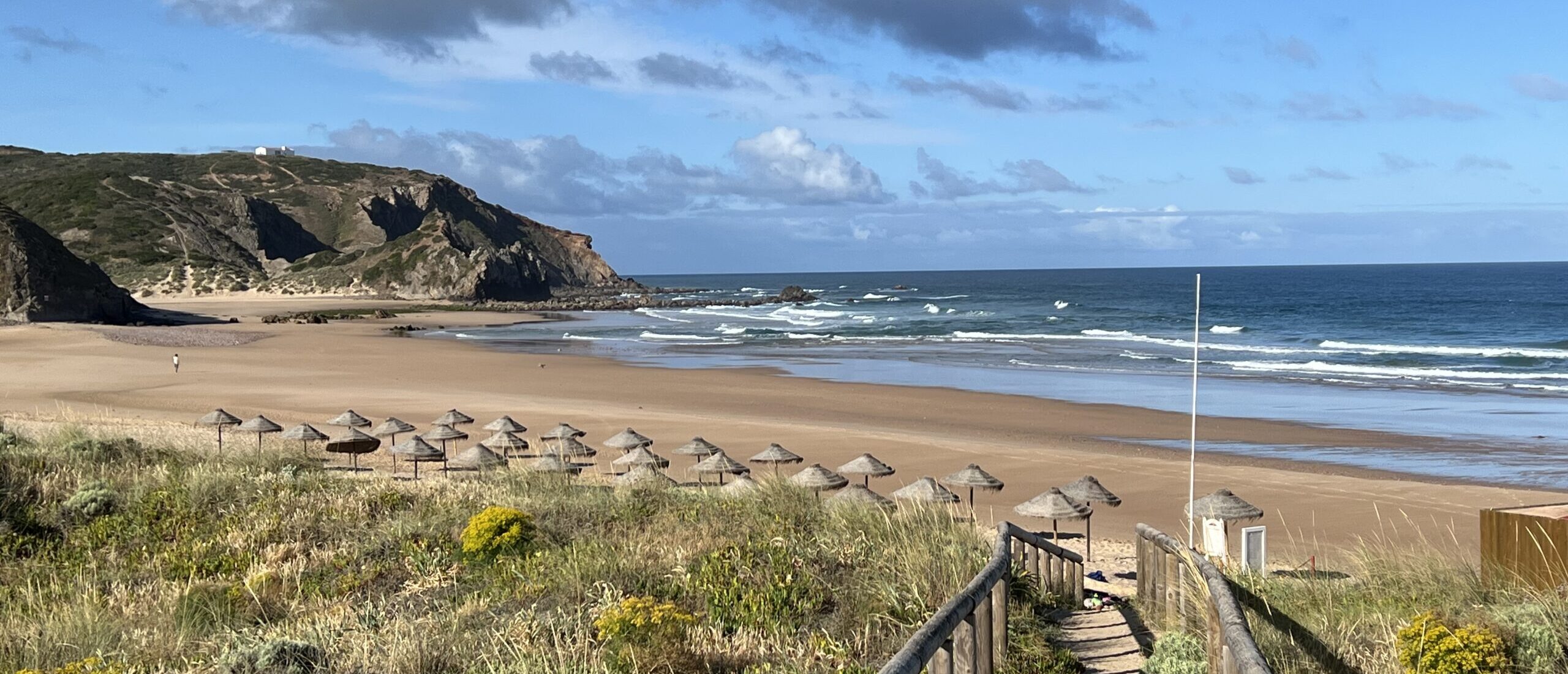
The terrain is breathtaking. You are walking right along the cliff edges with the brilliant blue ocean on your right, giving you astonishing views every single day. The villages are deeply charming, featuring narrow streets, traditional tiled walkways, and homes built right into the hillsides. Each stop offers incredible restaurants serving authentic Portuguese food and fresh seafood. Plus, you get daily opportunities to take a refreshing dip in the ocean!
Continue to follow along as I hike the Fisherman’s Trail!